Yes, a 501(c)(3) can take in more money than it spends, but in the nonprofit world that extra money is called a surplus, not a profit.
So, can a 501(c)(3) end the year with more money than it spent? Yes. One of the most common misconceptions about nonprofits is that they must break even or operate at a loss. In reality, a surplus helps an organization stay financially stable, grow its programs, and sustain its mission for years to come.
The IRS does, however, have important rules about how nonprofits earn, manage, and use their funds.
What Does “Nonprofit” Really Mean?
“Nonprofit” does not mean an organization cannot earn money. It means the organization’s net earnings cannot be distributed to founders, board members, officers, or other private individuals for their personal benefit.
Unlike for-profit businesses, nonprofits must use their resources to advance their charitable, religious, educational, or other tax-exempt purposes.
Nonprofits can bring in revenue through:
- Donations, grants, and fundraising events
- Membership and program fees
- Sales of related products and services
- Educational workshops
- Investment and interest income
Some business activities unrelated to the organization’s exempt purpose may be subject to tax.
Does Your Nonprofit Have to Spend Every Dollar It Receives?
No. Another common misconception is that nonprofits must spend all their revenue by the end of the year to keep their 501(c)(3) status.
There is no general IRS requirement that public charities spend every dollar they receive each year. Keeping reserves can be a responsible financial practice.
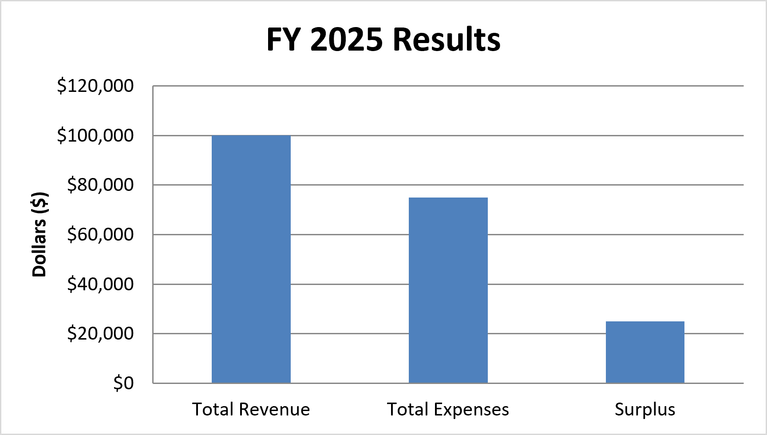
For example, if a nonprofit receives $100,000 in donations and spends $75,000 on programs and operating expenses, it can keep the remaining $25,000 for future needs (pictured below).
Those funds can be used to:
- Build emergency reserves for unexpected expenses
- Expand charitable programs and community services
- Purchase equipment or property needed for operations
- Stay financially stable during periods of reduced funding
- Invest for the future to generate additional income
Organizations must still honor any donor restrictions on how contributions are used.
The Bottom Line
A successful nonprofit does not have to operate at a loss or keep a zero-dollar bank balance.
Generating revenue, building reserves, and investing responsibly can strengthen an organization’s financial future and expand its charitable impact.
What matters most is how the organization manages its money and whether those funds support its tax-exempt mission.
Remember: Being a nonprofit doesn’t mean you can’t bring in more than you spend. It means every dollar must serve your mission, not private interests.
Floyd Green CPA is committed to helping nonprofit organizations understand their 501(c)(3) responsibilities and maintain their tax-exempt status.